

Lombok Weaving Village: Inside Sasak Songket Tradition
Step into Lombok's weaving village, where Sasak songket is handwoven thread by thread. Discover the craft, the culture, and where to see it.
Lombok Weaving Village: Exploring Sasak Songket From Selong Selo
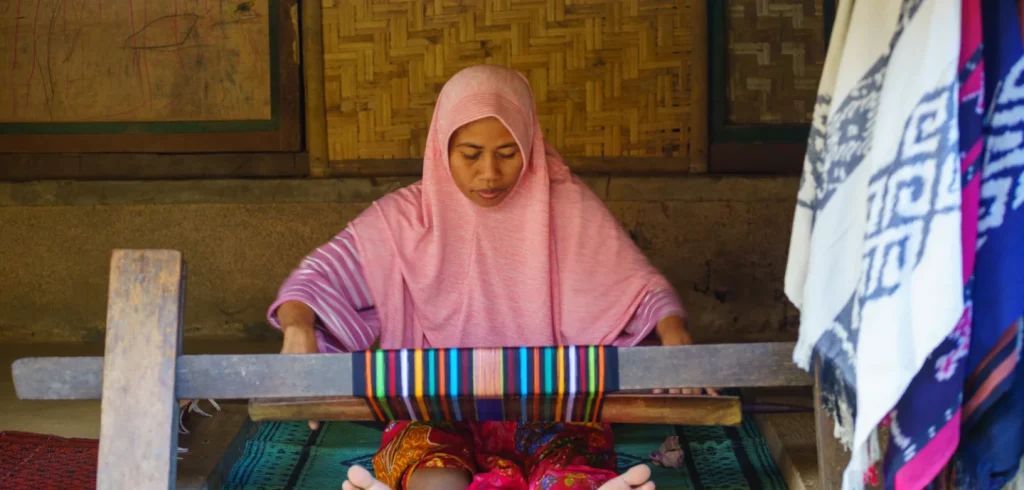
In a row of open-air pavilions along the main road into Sukarara, a woman sits cross-legged at a wooden loom, her feet braced against the frame, her hands moving a shuttle back and forth in a motion she has repeated since childhood. She isn’t performing for anyone. This is simply how the morning begins in Lombok’s weaving villages, where songket, the island’s traditional gold and silver-threaded cloth, is still made the way it was generations ago.
For travelers who associate Lombok primarily with surf breaks and turquoise water, a visit to a Lombok weaving village like Sukarara or nearby Sade offers something different: a direct line into Sasak culture, told through cloth rather than words. It’s a short enough detour from the south coast that guests staying at Selong Selo often fold it into the same trip as a morning surf session or a spa afternoon.
A Craft Passed Through Generations
Sasak weaving has been practiced on Lombok for centuries, rooted in the traditions of the Sasak people, the island’s predominant ethnic group. Textiles here have long carried social meaning beyond decoration. A woven cloth could signal a young woman’s readiness for marriage, mark a family’s status, or serve as a ceremonial gift during rites of passage.
In many Sasak villages, weaving was historically considered a required skill for young women, taught by mothers and grandmothers well before formal schooling became widespread. That apprenticeship model still shapes how the craft is passed down today. Walk through Sukarara and it’s common to see three generations working within view of one another: a grandmother finishing a complex songket panel, a mother teaching a simpler pattern to her daughter, and a young girl practicing on a smaller loom nearby.
What Makes Songket Different
Lombok songket is a supplementary weft weaving technique, meaning gold or silver metallic thread (or, in older and more traditional pieces, hand-spun cotton) is woven directly into the base fabric to create raised, often intricate patterns. Unlike printed or embroidered textiles, the pattern is built into the structure of the cloth itself, thread by thread, on a backstrap or frame loom.
A single songket piece can take anywhere from several days to several months to complete, depending on the complexity of the motif and the width of the cloth. The most elaborate ceremonial pieces, woven for weddings or formal Sasak court garments, are the slowest and most valuable, sometimes taking a weaver three months of daily work.
Pricing follows the same logic as the time invested. According to weavers at Sukarara’s family-run cooperatives, smaller pieces made with synthetic metallic thread, such as scarves or table runners, typically start in the range of a few hundred thousand rupiah, while large ceremonial songket woven with genuine metallic thread can run several million rupiah or more. Thread quality, motif complexity, and cloth size are the main variables, which is why two songket pieces of similar size can sit at very different price points.
How Songket Is Made, Step by Step

Watching a weaver work makes the craft look almost meditative, but the process behind a finished piece of Lombok songket involves several distinct stages, most of which happen before the decorative pattern ever appears:
1. Thread selection – the weaver chooses cotton or silk for the base cloth, along with gold, silver, or synthetic metallic thread for the pattern.
2. Dyeing – if natural dyes are used, threads are soaked in plant-based dye baths, such as indigo or mahogany bark, and left to set before weaving begins.
3. Warping the loom – the base threads are strung onto a backstrap or frame loom, a setup step that can take a full day on its own for a complex design.
4. Weaving the base cloth – the weaver passes the shuttle back and forth to build the plain foundation fabric the pattern will sit on.
5. Supplementary weft patterning – metallic or contrasting thread is woven directly into the base cloth by hand, one small section at a time, to build the raised motif.
6. Finishing – the completed cloth is trimmed, checked for consistency, and, for ceremonial pieces, sometimes pressed or set aside for a specific occasion.
Because each of these stages is done by hand, no two songket pieces come out quite the same, even when woven from the same pattern.
Weaving as Family and Community Life
In a Lombok weaving village like Sukarara or Sade, weaving is inseparable from daily domestic life. It happens in the same open-sided pavilions where families cook, care for children, and receive guests. The loom sits at the center of the house, not tucked away in a workshop.
This has practical implications for income as well as culture. For many Sasak families, songket sales supplement farming income, and the skill offers women in particular a source of independent earnings within a traditionally structured household economy. Selling directly to visitors, rather than through intermediaries, allows more of that income to stay with the weaver and her family.
Visiting Respectfully: Why It Matters
Tourism has changed daily life in Sukarara and Sade, and not always for the better. Some family compounds now function partly as demonstration spaces for visiting groups, with the risk that the craft becomes a performance rather than a lived tradition.
Visitors can help tip the balance back toward genuine cultural exchange by keeping a few things in mind:
• Ask before photographing individuals at their looms, particularly inside private family compounds
• Buy directly from weavers or small family-run shops where possible, rather than exclusively from large roadside retailers
• Take a few minutes to watch and ask questions rather than rushing through for a quick photo
• Dress modestly, as you would when visiting any traditional Sasak village
These small choices matter more than they might seem. A visit that treats weavers as artisans rather than attractions supports the continuation of the craft on its own terms.
What to Expect During a Visit
A typical stop at a Lombok weaving village like Sukarara includes a walk past several open weaving pavilions, often with a brief, informal explanation of the technique from a family member or shop attendant. Some visitors are invited to try the loom themselves, which quickly reveals how much coordination and patience the craft demands.
Sade Village, a traditional Sasak settlement built almost entirely of thatched-roof houses on a hillside, offers a complementary experience: less focused on the weaving process itself and more on the architecture and daily rhythms of a still-inhabited traditional village. Visiting both villages on the same day gives a fuller picture of Sasak life, from the built environment to the textiles produced within it.
For Selong Selo guests, the resort’s team can arrange a driver and a suggested route for the day, so the visit fits around tide times or spa bookings rather than the other way around.
Tips for Buying Authentic Woven Pieces
Songket ranges widely in price, largely based on the thread used, the complexity of the pattern, and the time invested. A few guidelines help when shopping:
• Ask whether metallic thread is used, and whether it’s gold-toned synthetic thread or genuine metallic thread, as this affects both price and durability
• Look closely at the reverse side of the cloth; hand-loomed songket typically shows visible thread work and slight irregularities that machine-made imitations lack
• Expect handmade pieces to take time, so extremely low prices on elaborate patterns are worth questioning
• Ask about the pattern’s meaning, both out of genuine interest and because weavers are often glad to share it
A woven piece bought this way becomes more than a souvenir. It’s a small, functional record of a specific technique, village, and often a specific weaver’s hand. Several Selong Selo guests have used a finished songket as a runner across a villa dining table or a throw over a lounge chair, which is a nice way to keep the trip visible at home rather than folding it away.
Exploring Lombok’s Culture From Selong Selo

For guests staying at Selong Selo, on Lombok’s south coast near Selong Belanak Bay, a day spent at a Lombok weaving village like Sukarara or Sade fits naturally alongside time on the water or an afternoon at Senja Spa. The villages sit within reach of a scenic drive through Central Lombok’s rice terraces, making the trip as much about the landscape along the way as the destination itself.
Many guests choose to pair the visit with lunch at a local warung en route, or extend the day with a stop at a nearby waterfall before returning to the resort in the late afternoon. Because Selong Selo’s villas are designed around privacy and space, returning from a full day of village exploring to a quiet pool or an evening meal at Aura Restaurant offers a natural rhythm: a day of cultural immersion followed by an evening of rest.
This is, in many ways, the appeal of basing a Lombok trip at Selong Selo. The resort doesn’t compete with the island’s cultural layer; it simply gives travelers a comfortable, well-located point from which to reach it, whether that means a weaving village in the morning or Selong Belanak’s break at sunset.
If you’re planning a stay, our team can help build a day around Sukarara, Sade, and the surrounding countryside, alongside the resort’s own wellness and dining experiences.
Booking directly also has its own advantages: reservations made straight through the resort come with direct bookings perks not available elsewhere. Families traveling together may find the family package pairs well with a cultural day like this one, and those planning a warmer-season trip may want to check the summer escape offer before booking.
Other Cultural Stops Near Selong Selo
Sukarara and Sade are an excellent introduction to Sasak culture, but they’re not the only ones on the island. Banyumulek, a pottery village known for its hand-shaped terracotta, offers a similar close-up view of a traditional craft in daily use. Central Lombok’s calendar of Sasak ceremonies, from harvest rituals to wedding traditions, is another layer worth asking about if the timing of a visit happens to align. Both make natural additions to a longer Lombok itinerary built around Selong Selo.
FAQ
What is the difference between Sukarara and Sade villages?
Sukarara is known primarily for its songket weaving, with family compounds set up to show and sell handwoven textiles. Sade is a traditional Sasak settlement built of thatched-roof houses on a hillside, offering more insight into everyday architecture and village life than into weaving specifically. Visiting both gives a broader view of Sasak culture.
How long does it take to weave one piece of songket?
Anywhere from a few days to one month, depending on the pattern’s complexity and the thread used.
Is it appropriate to take photos in the weaving villages?
Yes, generally, but it’s respectful to ask before photographing individuals at their looms, especially within private family compounds. Photographing the pavilions and general village setting is typically welcomed.
How far is the weaving village from Selong Selo?
Sukarara and Sade are both located in Central Lombok, roughly a scenic 60 minute drive from Selong Selo on the island’s south coast, depending on traffic and route. The drive itself passes through rice terraces and small villages, so it’s worth treating as part of the day rather than simply a transit stretch to get through.
What should I look for when buying authentic songket?
Check the reverse side of the cloth for visible handwoven thread work, ask whether the metallic thread is genuine or synthetic, and be cautious of very low prices on elaborate patterns, since hand-loomed songket takes considerable time to produce.
Can I buy songket cheaper in Mataram markets than in the village?
Prices in Mataram’s markets can look lower at first glance, but a meaningful share of that cloth is machine-made or produced outside Lombok entirely. Buying in Sukarara or Sade costs a bit more on average, though it comes with a much better chance the piece is genuinely hand-loomed and that more of the price goes directly to the weaver.
Is Sukarara suitable for a half-day trip from the south coast?
Yes. Given the drive time from Selong Selo, a half-day is enough to see the weaving pavilions, watch the process, and shop, especially if Sade is left for a separate trip or paired in only briefly on the way back.